

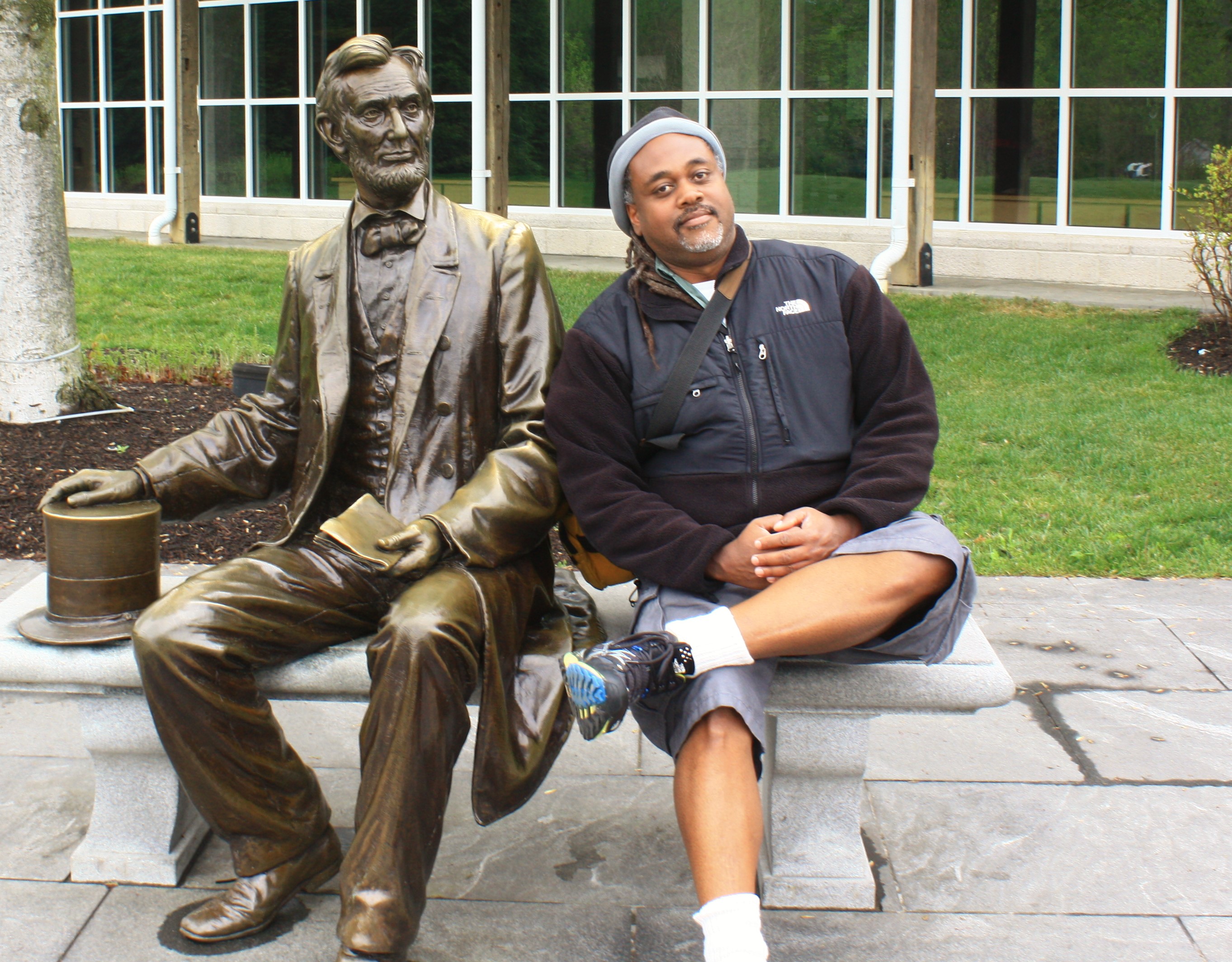
Alan Spears
Alan Spears, Senior Director of Cultural Resources, Government Affairs, National Parks Conservation Association
How did you become interested in historic preservation?
Funny, I don’t regard myself as a historic preservationist. I love American history and I got my start by walking across Civil War battlefields that were managed by the National Park Service; that may be a difference without a distinction, but I believe that some folks who love stories, who love history, may be a little put off by the label of historic preservationist. Maybe because it sounds like something you have to have a degree and 20 years of experience in to be that thing.
What led you to your field?
Serendipity. I was finishing a master’s at Howard University. One of the professors on my thesis defense committee, Dr. Elizabeth Clark-Lewis, knew someone at the National Parks Conservation Association (NPCA) who needed an intern. I applied and got the gig. Only afterwards did I begin to understand what the National Park Service was really about.
How does what you do relate to historic preservation?
Preservation and interpretation of cultural and historic resources is one direct way to enhance the diversity of the constituency for national parks, but that engagement only works if the National Park System is thought to be relevant to all people. I’ve spent a great deal of my career working to help diversify the stories that are commemorated and honored in our national parks -- that’s how I feel I relate to preservation.
Why do you think historic preservation matters?
History has happened. Preservation determines what we remember, who we honor, and therefore what we think is important. In my hometown of Washington, DC, we have statues of great men on horseback all over this town. All of them (most of them) deserve their laurels. But, if you go by the statuary here it would be evident that women, Black and Brown people, Indigenous and LGBTQ people have never made any positive, lasting contributions to this country. Fighting to ensure that the history we preserve is accurate, inclusive, and just, is critical, and that’s one reason why preservation matters to me.
What courses do you recommend for students interested in this field?
It depends on their field of interest or their personal connection to history. Beyond the coursework, I would look for things that help elucidate individual character.
At the Frederick Douglass National Historic Site in southeast DC there is displayed in Mr. Douglass’ bedroom pillowcase embroidered with a picture of two birds on a perch being closely observed by a third bird inching its way towards the first two. Below the drawing are the words “Two’s company, three’s a crowd.” The pillow was embroidered by Helen Pitts Douglass, his second wife. And she completed that project as a way of reminding her husband that his wandering eye was (ahem) an unwelcome thing. Through the presentation of that simple artifact, we see a different side of the Lion of Anacostia. Go to parks, visit the sites, walk the grounds, learn, and have a little fun learning.
Do you have a favorite preservation project? What made it special?
My last successful national monument campaign resulted in the designation of the Emmett Till & Mamie Till-Mobley National Monument. I worked on that campaign for five years. Our partners in Mississippi had been working on that victory since the 1990s. That’s my favorite because it added a unit to the National Park System that allows us to examine racism, white supremacy, and the fearlessness of people to resist when all the odds were against them!
What are you working on right now?
The designation of a new national park site honoring the life and legacy of Julius Rosenwald and the more than 5,300 schools his philanthropy helped build for African American students in the segregated south.
The ACHP’s mission is “preserving America’s heritage;” can you give us an example of how you have helped preserve America’s heritage in your career?
I have always attempted to serve as a moderating force for the telling of accurate history. We don’t need to topple Confederate monuments, that gets us nowhere. We do need to expand the narrative of our shared history to ensure it includes Harriet Tubman, Dolores Huerta, Julius Rosenwald, and Fannie Lou Hamer. We need more history, not less.
What advice do you have for youth looking to begin or expand their careers in historic preservation?
Know your field. Understand that preservation is inherently political. Work for the people – to improve their lot and the health of the nation. Laugh often. Especially at yourself.
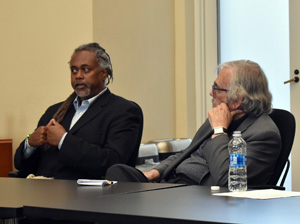
The Heritage Area Act you helped pass in 2022 extended federal funding for National Heritage Areas through 2037. For people unfamiliar with heritage areas, how do you explain their role in preservation and why that legislation mattered?
The National Heritage Area system is managed by the National Park Service. It is yet another NPS-managed program that helps to democratize the process of preservation in this country. It does that by providing some federal funding and technical support to empower local experts to more capably tell their part of the American experience, and to do that without adding another acre to the National Park System.
You've spent over two decades fighting to get African American history formally recognized within the National Park System, from Harriet Tubman to Emmett Till. What can young people do to ensure the full American story is told through our historic sites?
I’ll quote Frederick Douglass. “Agitate, agitate, agitate...”
What does a typical day look like for you, and how do you balance the policy and advocacy side of your work with the historical and cultural research side?
The beautiful thing about my profession is that there are no two days entirely the same. I enjoy being in the office a little, in the field a lot, and on Capitol Hill making the case for national parks and historic preservation.
For someone just starting out in the preservation field, what is the one piece of advice you wish someone had given you early in your career?
To not go into a tidal marsh at Kenilworth Aquatic Gardens in September of 2001 to fetch out tires during a National Public Lands Day cleanup. I got stuck and had to be extracted by the Park Police. That was one helicopter ride I could have done without.